Reflected XSS — Search Bar
| Field | Value |
|---|---|
| Platform | PortSwigger Web Security Academy |
| Vulnerability | Reflected Cross-Site Scripting (XSS) |
| Difficulty | Apprentice |
| Injection Point | Search bar (?search= query parameter) |
| Goal | Execute alert() in the browser via reflected XSS |
Phase 1 — Reconnaissance
We land on a blog with a search bar.

Phase 2 — Confirming HTML Injection
Testing whether the search bar reflects HTML without sanitization:
<marquee>Kasane Teto</marquee>
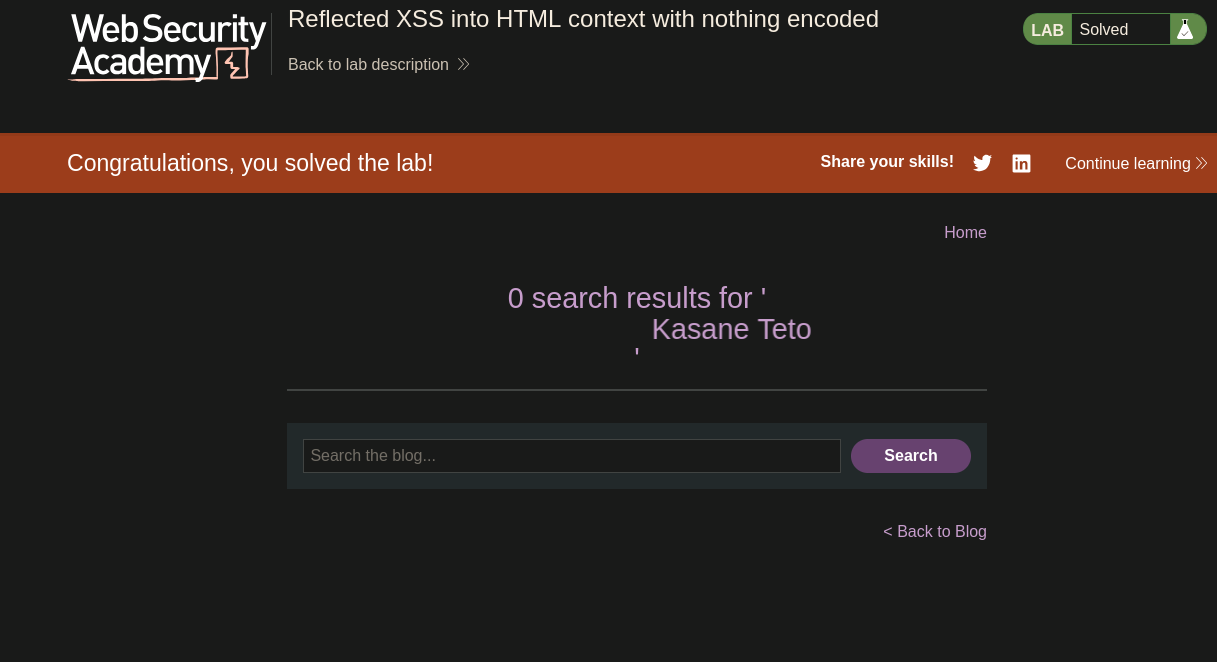
The text scrolled across the page — the HTML tag was rendered by the browser rather than escaped and displayed as literal text. The application is inserting user input directly into the HTML response without encoding. HTML injection is confirmed, and script execution follows naturally.
Phase 3 — Reflected XSS Execution
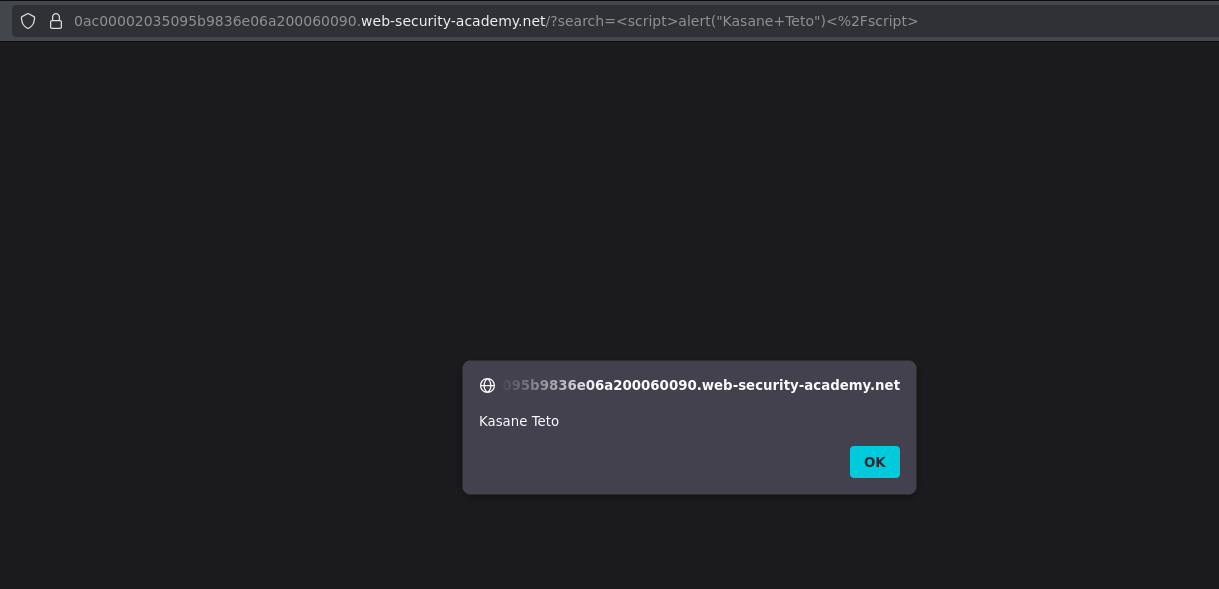
<script>alert("Kasane Teto")</script>
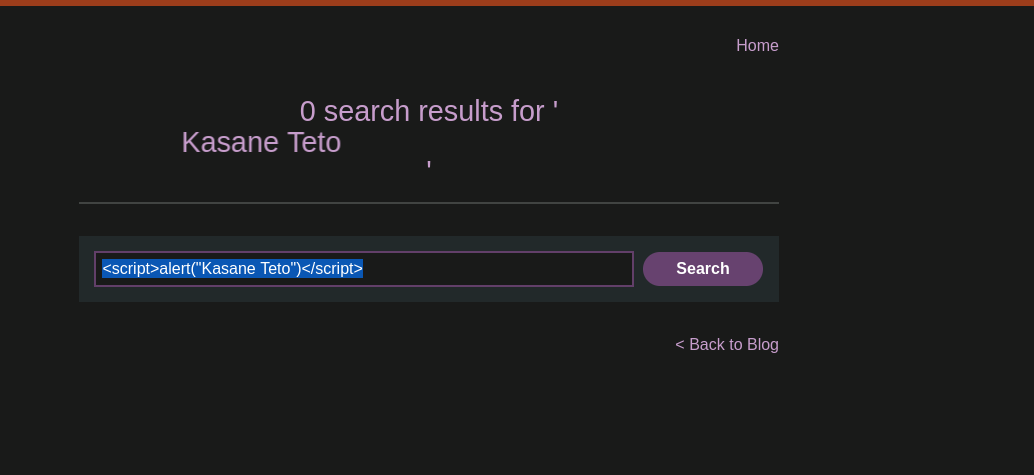
The alert fired — reflected XSS confirmed. Lab solved. The URL now contains the payload:
/?search=<script>alert("Kasane+Teto")</script>
This URL itself is the attack vector — anyone who clicks it will trigger the script in their own browser context.
Phase 4 — Testing Cookie Theft and the HttpOnly Defence
After confirming XSS works, testing whether session cookies are accessible:
<script>alert(document.cookie)</script>
The alert fired but showed nothing — the session cookie is not accessible via JavaScript. The reason is the HttpOnly flag.
When a cookie has HttpOnly set, the browser enforces a strict rule: that cookie cannot be read by any JavaScript running on the page — not even JavaScript from the legitimate domain. The cookie is still sent automatically with every HTTP request, but document.cookie will not include it.
Set-Cookie: session=abc123; HttpOnly; Secure
↑
JavaScript cannot read this
document.cookie returns empty string
HttpOnly does not prevent the cookie from being sent to the server — it only prevents JavaScript from reading it client-side. An attacker with XSS can still perform actions on behalf of the user (make authenticated requests, submit forms) but cannot steal the session token itself to log in from a different machine.
Conclusion
- The search bar reflected user input directly into the HTML response without encoding —
<marquee>rendered confirmed HTML injection. - Injecting
<script>alert("Kasane Teto")</script>executed JavaScript in the browser — reflected XSS confirmed. - The payload travels in the
?search=query parameter — the crafted URL is the delivery mechanism for attacking victims. document.cookiereturned empty because the session cookie has theHttpOnlyflag set — XSS execution succeeded but session token theft was prevented by the server-side cookie configuration.